01 / Brief
Make the first exercise easier to run.
Observed need
Many smaller organizations know they need to test incident response plans, but realistic tabletop exercises can feel too complex, too expensive, or too technical to start.
02 / Exercise system
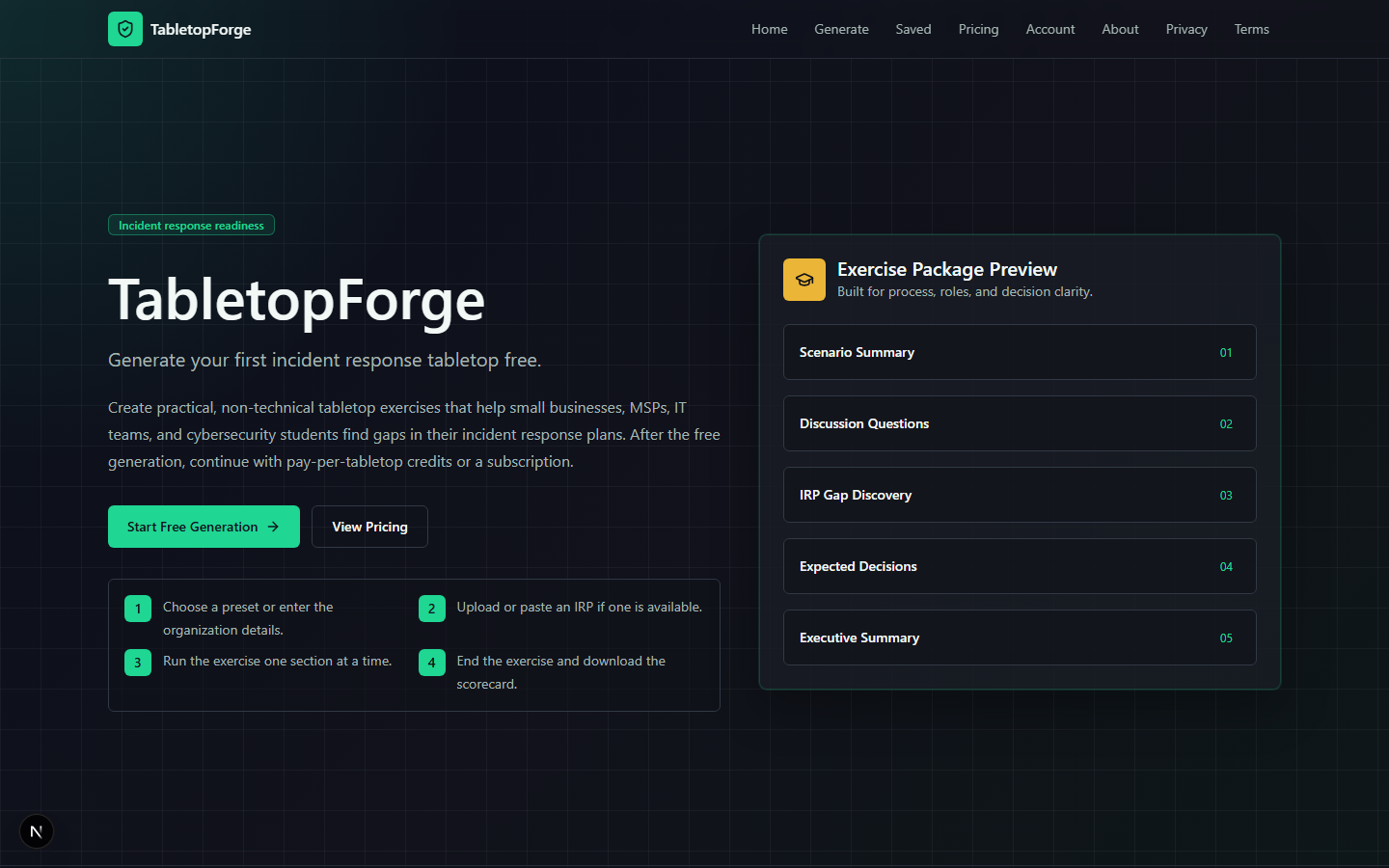
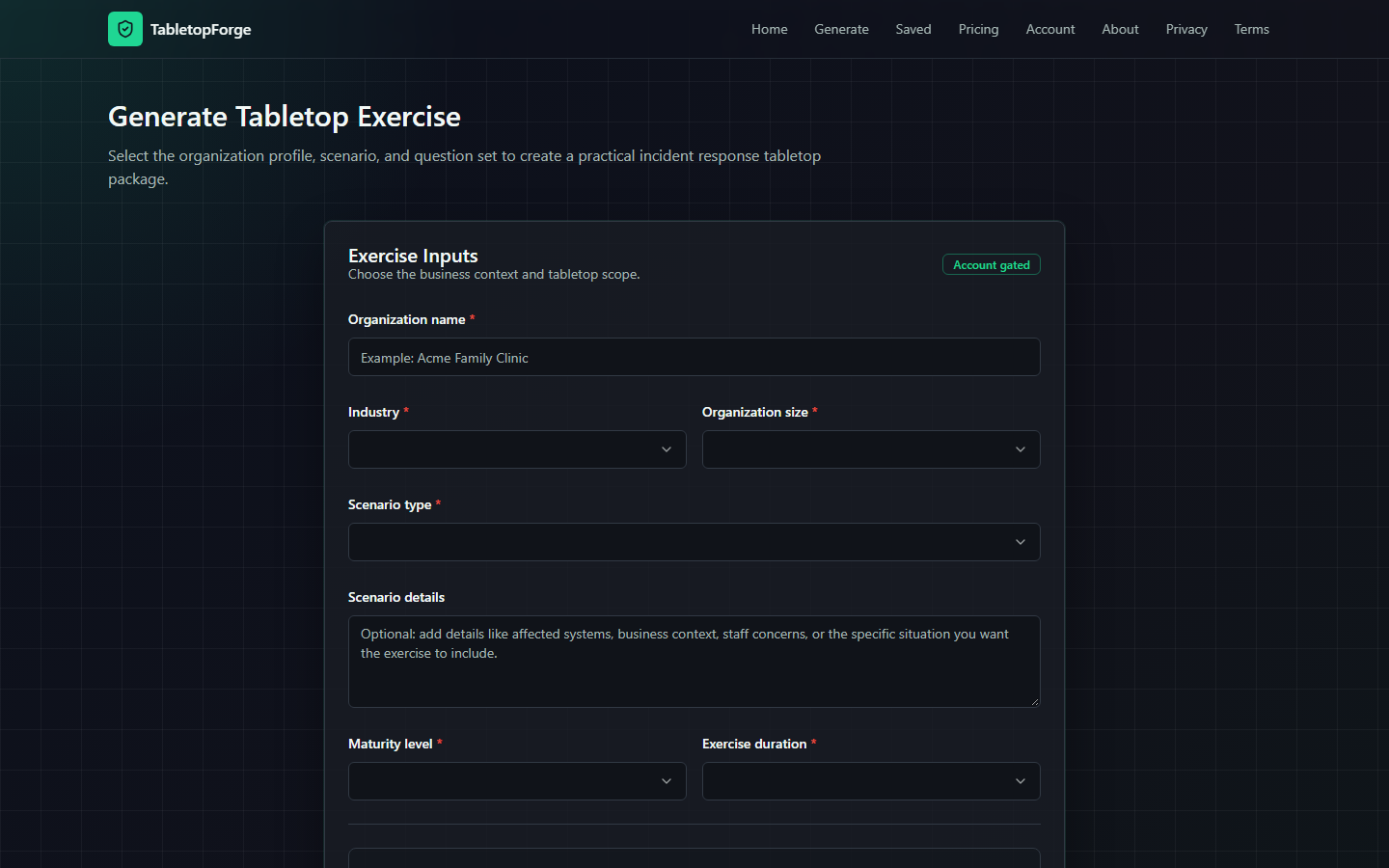
One scenario enters. A working exercise packet leaves.
Scenario library
- Phishing
- BEC
- Ransomware
- Insider threat
- Cloud misconfiguration
- Vendor breach
- Compromised admin
TF
Exercise builder
guided configuration
- 01 Summary + objectives
- 02 Participants + questions
- 03 IRP gap prompts
- 04 Facilitator notes
- 05 Executive summary
- 06 Lessons-learned template
03 / Delivery record
Trace the build from input to deliverable.
The current codebase separates the guided interface, exercise-generation service, and stored application data so each part can evolve without obscuring the workflow.
Exercise workflow
- Guided incident and organization inputs
- Copyable and downloadable Markdown
- Generated summaries, prompts, notes, and templates
- Deterministic fallback when AI generation is unavailable
Application structure
- Next.js and React frontend
- Express API with PostgreSQL persistence
- Authentication and account routes
- Billing-ready integration points
04 / Security value
Turn discussion gaps into visible work.
EscalationWho needs to know?
AuthorityWho can decide?
CommunicationWhat is already prepared?
Follow-throughHow is remediation tracked?
The generator guides a team toward missing escalation paths, unclear decision authority, weak communication templates, and gaps in lessons-learned tracking.
05 / Reflection
A useful security product also has to help people make decisions under pressure, document those decisions, and convert findings into remediation work.
This project pushed the work beyond alerts and tools and toward the people who have to use an incident response plan.